Why Hyperlocal Grocery Delivery (Zepto Clone) Is the Hottest Business Model Right Now
Published: May 14, 2026 | Category: Business Models, On-Demand Apps | Read time: ~10 mins
Ten minutes. That is all it takes for Zepto to put fresh groceries at your door.
When two Stanford dropouts launched Zepto in 2021, the idea of delivering groceries in under ten minutes sounded more like a marketing stunt than a sustainable business. Four years later, Zepto sits at a $5.9 billion valuation, clocked ₹11,110 crore (~$1.3 billion) in revenue in FY2025 a 150% jump from the previous year and is being studied by entrepreneurs worldwide as the blueprint for the next big opportunity in commerce.
That opportunity has a name: hyperlocal grocery delivery. And the fastest way to enter it is through a Zepto clone app.
This post breaks down why this business model is exploding right now, how it actually works, what you need to launch one, and how a clone script gets you there at a fraction of the cost.
What Is Hyperlocal Grocery Delivery and Why Is It Different?
Most e-commerce products are delivered in 1–3 days. Standard grocery delivery apps promise same-day or next-day. Hyperlocal grocery delivery promises 10–15 minutes and it keeps that promise by fundamentally rethinking the delivery chain.
Traditional models: centralized warehouse → long route → delayed delivery.
Hyperlocal model: neighborhood micro-warehouse → 2 km radius → 10 minutes.
The key insight is that speed comes from proximity, not just speed. Instead of racing across the city, hyperlocal platforms place inventory inside the neighborhoods they serve, through a network of what the industry calls dark stores.
The Dark Store Advantage: Zepto’s Secret Weapon
A dark store is a small warehouse typically 2,000–4,000 sq ft located inside a dense residential area. It looks nothing like a retail store. There are no customers browsing inside. Everything is optimized for rapid order picking.
Here is what makes dark stores so powerful:
- Strategic placement: Located within 1–3 km of customer clusters, using data heatmaps that analyse population density, traffic patterns, and purchase history.
- Limited but high-demand SKUs: Stocking around 2,500–3,000 fast-moving items instead of 30,000+ like a supermarket. This makes picking an order possible in under 60 seconds.
- Riders stationed on-site: Delivery partners wait at the dark store so dispatch is instant the moment an order is packed.
Zepto currently operates 1,000+ dark stores across India and has used this model to achieve 8–10 million monthly orders. The same infrastructure can be replicated in any city with sufficient population density, which is exactly the opportunity for entrepreneurs using a Zepto clone.
Why Right Now? The Market Numbers Are Hard to Ignore
The numbers backing hyperlocal grocery delivery are not speculative they are already happening:
- The global hyperlocal grocery delivery market was valued at $23.89 billion in 2025 and is projected to reach $44.13 billion by 2031, growing at a CAGR of 10.77%.
- A separate forecast projects the market reaching $111.3 billion by 2035 at an 8.8% CAGR.
- India’s quick-commerce market alone was valued at ₹640 billion in FY2025 and is projected to triple by 2028.
- Zepto secured $665 million in a single funding round in 2024, signalling overwhelming investor confidence in this model.
Three forces are driving this growth simultaneously:
- Consumer behaviour has permanently shifted. The pandemic normalised home delivery for groceries. Consumers who used delivery apps out of necessity in 2020 now use them out of preference. Urban millennials and Gen Z customers, in particular, expect instant fulfilment as a baseline, not a luxury.
- Smartphone penetration in emerging markets. India, Southeast Asia, the Middle East, and Africa are all experiencing rapid smartphone adoption. Each new smartphone user is a potential customer for hyperlocal delivery. The demographic overlap between first-time smartphone owners and first-time app shoppers is enormous.
- Quick commerce infrastructure is maturing. Dark store operations, last-mile logistics software, and real-time inventory management have all become significantly more efficient and affordable over the past three years. What required $10 million to build in 2021 can now be replicated with a white-label grocery delivery clone script and a modest dark store investment.
How the Zepto Business Model Actually Makes Money
One of the most common misconceptions about quick commerce is that razor-thin margins make it unprofitable. Zepto’s revenue model tells a different story it has multiple income streams that compound as the platform scales.
- Product margins: Zepto operates as both a retailer and a marketplace. On direct inventory, it earns standard retail margins, typically 15–25% on groceries.
- Delivery fees: For orders below a minimum value or for non-subscribers, a delivery fee of ₹15–₹30 per order helps offset logistics costs and nudges customers toward larger baskets.
- Zepto Pass (subscription): A monthly subscription offering free deliveries and exclusive discounts. Subscriptions improve order frequency and provide predictable recurring revenue.
- Advertising and brand partnerships: Through Zepto Atom, brands pay premium fees for sponsored listings, banner placements, and product sampling. This retail media revenue grows as the platform’s daily active user base grows and it has near-100% margin since no delivery is involved.
- Private labels: Higher-margin in-house branded products in categories like staples, snacks, and beverages, giving the platform pricing control and customer loyalty.
When combined at scale, these revenue streams make the model EBITDA-positive. Zepto has already achieved EBITDA positivity in 50–60% of its dark stores, proving that profitability is not theoretical.
Why Entrepreneurs Are Choosing a Zepto Clone Script
Building a quick commerce platform from scratch means months of development, a large engineering team, and budgets ranging from $80,000 to $150,000 before you serve a single order. A Zepto clone app cuts that cost by up to 70% and compresses the timeline from months to weeks.
A quality on-demand app development clone script gives you:
- Customer app (iOS & Android): Browse products, add to cart, real-time order tracking, multiple payment options, loyalty points, scheduled delivery.
- Delivery partner app: Accept/reject orders, route navigation, earnings dashboard, availability toggle.
- Vendor/dark store panel: Inventory management, order acceptance, product catalogue, promotions.
- Admin dashboard: Full control over users, stores, riders, commissions, analytics, and promotions across all locations.
All of these ships are white-label, meaning they launch under your own brand name and visual identity, not the script provider’s.
The real advantage is not just cost. It is a validated architecture. The clone is built on a business model that has already proven product-market fit with millions of users. You are not guessing whether 10-minute delivery will resonate, you are entering a market that is already asking for it.
What You Actually Need to Launch
A Zepto clone script is the technology layer. But launching a successful hyperlocal grocery business also requires getting the operational model right. Here is what to plan for before launch:
- Choose your city and zone carefully. Start with one neighbourhood or one zone within a city, not the entire city. High population density, young demographics, and limited existing quick-commerce competition are the ideal conditions. Zepto itself started in Mumbai before expanding nationally.
- Set up your first dark store. A 2,000–3,000 sq ft space in a central residential location. Stock 500–1,000 high-demand SKUs initially (fresh produce, dairy, snacks, personal care, beverages). You can expand the catalogue as you learn your customers’ buying patterns.
- Source inventory smartly. Partner with local wholesalers, FMCG distributors, and regional suppliers. Negotiate on volume, not variety. Early profitability depends on minimising waste, which means stocking what your specific neighbourhood actually buys.
- Build your delivery fleet. Start with 5–10 delivery partners per dark store on a gig model. As order density grows, a mix of gig and full-time riders becomes more economical.
- Acquire your first customers. Hyper-local marketing works best at launch: flyers, WhatsApp groups, housing society tie-ups, RWA partnerships, and referral programs. Your first 500 customers will come from within 2 km of your dark store. Treat them like gold.
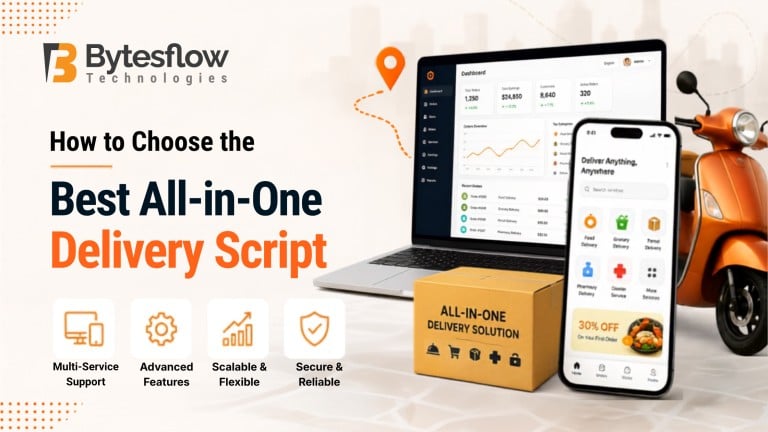
If you want to see what a complete all-in-one delivery script looks like as a foundation, explore how multi-category delivery platforms handle the same operational complexity at scale.
Zepto Clone vs Building From Scratch: A Practical Comparison
Factor | Custom Build | Zepto Clone Script |
|---|---|---|
Development time | 6–12 months | 2–6 weeks |
Cost | $80,000–$150,000 | Up to 70% cheaper |
Business model validation | Untested | Proven at scale |
White-label branding | Yes | Yes |
Post-launch support | Depends on team | Included |
Scalability | Custom architecture | Built-in |
For most entrepreneurs entering the quick commerce space, the clone script is the rational choice. The technology is not the competitive moat in hyperlocal delivery; the dark store network, supplier relationships, and local customer trust are. A clone script lets you invest your capital and energy where it actually matters.
Conclusion
The Zepto story is not really about groceries. It is about what consumers will expect from every commerce experience going forward. Speed, convenience, and reliability delivered through a neighbourhood-scale logistics network. That expectation is now spreading from Indian metros to cities across Asia, the Middle East, and Africa.
The entrepreneurs who act now, before every market has a Zepto equivalent, are the ones who will build the next generation of quick-commerce brands. The business model is validated. The infrastructure is accessible. The demand is already there.
A Zepto clone app is your fastest, most cost-effective path to owning a piece of this market.
Email us at: [email protected]
👉 View Live Demo | Get a Free Consultation
Frequently Asked Questions
1. What is a Zepto clone app?
A Zepto clone app is a ready-made, white-label quick commerce script that replicates Zepto’s 10-minute grocery delivery model. It includes a customer app, delivery partner app, vendor panel, and admin dashboard — fully customizable under your own brand.
2. How much does it cost to build a Zepto clone app?
Building from scratch can cost $80,000–$150,000. A white-label Zepto clone script from Bytesflow is up to 70% cheaper and can be launched in weeks, not months.
3. How do dark stores work in a hyperlocal grocery delivery model?
Dark stores are small micro-warehouses in dense residential areas, stocking high-demand items and optimised for fast order picking. Delivery riders stationed nearby dispatch orders within a 1–3 km radius, enabling 10-minute delivery.
4. Is hyperlocal grocery delivery profitable?
Yes. The global market is projected to grow from $23.89 billion in 2025 to $44.13 billion by 2031. Zepto reported 150% year-over-year revenue growth in FY2025, with 50–60% of its dark stores already EBITDA-positive.