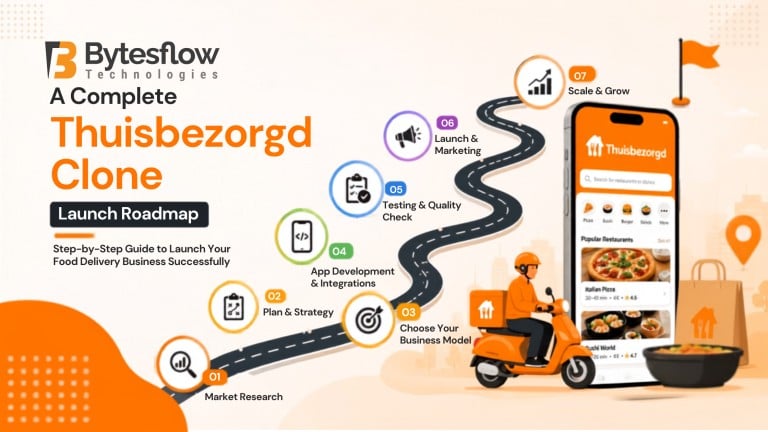
A Complete Thuisbezorgd Clone Launch Roadmap
Published: July 23, 2026 | Category: Launch Guide | Read time: ~10 min
Introduction
Launching a food delivery platform without a plan is how most founders burn budget on the wrong things. A Thuisbezorgd clone gives you a head start on tech, but the tech alone won’t get you to a successful launch. You still need a sequence, a set of decisions made in the right order, and a clear view of what happens after go-live.
This roadmap walks through that sequence, step by step, in short and practical terms.
Why You Need a Roadmap Before Launching a Thuisbezorgd Clone
Most delivery app launches fail for the same reasons:
- No real market validation before spending on development
- Features built that customers never asked for
- Compliance and payments handled as an afterthought
- No plan for onboarding restaurants and riders at the same time
A roadmap forces you to sequence these correctly instead of tackling them all at once. It’s the difference between a Thuisbezorgd clone app that goes live smoothly and one that stalls three weeks before launch.
An 8 Step Thuisbezorgd Clone Launch Roadmap
1. Validate the Market First
Before touching any software, confirm there’s real demand.
- Identify your target city or region
- Check how many restaurants currently have no delivery partner
- Study competitor pricing and delivery times
Skipping this step is the single biggest reason clone-based businesses fail early. Your research here also shapes what features actually matter later. We’ve covered this in more depth in our guide on building a scalable food delivery clone app, which is worth reading before you commit to a build.
2. Choose Your Clone Script Carefully
This is where most of your long-term flexibility gets decided. A weak script choice here creates problems you’ll be fixing for years.
- Look for a Thuisbezorgd clone script with editable source code
- Confirm it supports multi-restaurant and multi-rider models
- Check the vendor’s update history and support responsiveness.
You can check out our Uber Eats clone script buyer’s checklist which covers many of the same evaluation criteria that apply here too.
3. Plan Core Features Before Customization
Get the essentials locked in before adding anything creative.
- Order placement and live tracking
- Multiple payment options
- Restaurant dashboard for menu and order management
- Rider app with route and earnings visibility
Once the basics are solid, layer in differentiation.
4. Set Up Payments and Compliance Early
This step gets rushed constantly, and it shouldn’t be.
- Integrate a compliant payment processor like Stripe
- Build your platform around GDPR requirements from day one
- Confirm tax handling for the country you’re launching in
Fixing compliance after launch is far more expensive than building it in from the start. If you’re still finalising your budget, our real cost of building a Wolt clone app breakdown gives a useful reference point for what compliance and payment setup typically add to the total.
5. Build Your Onboarding Pipeline
Restaurants and riders need to join at the same pace, not one after the other.
- Create a simple restaurant sign-up and menu upload process
- Set clear commission and payout terms upfront
- Recruit an initial batch of riders before your public launch
A platform with restaurants but no riders, or riders but no restaurants, fails on day one regardless of how good the app looks.
6. Test With a Soft Launch
Never go straight to a full public rollout.
- Run a limited launch in one neighborhood or district
- Track order completion rates and delivery times closely
- Fix friction points before scaling to the full city
This is also where you confirm your GPS and routing setup works as expected. Tools like Google Maps Platform are standard here for accurate ETAs and navigation.
7. Market the Launch Locally First
Broad marketing before you’ve proven the model wastes money.
- Partner with a handful of popular local restaurants for launch buzz
- Offer limited-time discounts to first-time users
- Use local social media groups and community pages, not just paid ads
Save broader city-wide or multi-region marketing for after your soft launch numbers look solid.
8. Monitor, Optimize, and Expand
Launch day is the start, not the finish line.
- Track retention, not just downloads
- Review restaurant and rider feedback weekly in the first month
- Expand to new zones only once your current zone is stable
Common Pitfalls to Avoid Along the Way
A few mistakes show up again and again in Thuisbezorgd clone launches:
- Launching city-wide before testing in one zone
- Ignoring rider supply while focusing only on customer acquisition
- Treating the clone script as “done” instead of iterating post-launch
- Underestimating how long restaurant onboarding actually takes
Avoiding these keeps your timeline realistic and your budget under control. Our post on DoorDash clone startup mistakes covers several more pitfalls that apply just as much here.
Final Thoughts
Validate demand, choose your platform carefully, get compliance right early, and onboard restaurants and riders in parallel. Do this well, and a Thuisbezorgd clone can go from idea to a running local business faster than building from scratch.
At Bytesflow, we’ve helped founders follow this exact roadmap with a ready-made, fully customizable delivery platform. If you’d like to see it in action, view our demo or get in touch for a free consultation to plan your launch.
Frequently Asked Questions
1. How long does it take to launch a Thuisbezorgd clone?
With a ready-made script, most founders can go live in a few weeks, including app store review time, compared to several months for a custom build.
2. Do I need separate apps for restaurants and riders?
Yes. A proper Thuisbezorgd clone app includes a customer app, a restaurant dashboard, and a rider app, each built for a different type of user.
3. What’s the biggest risk in the early launch phase?
Launching too broadly too fast. A soft launch in one area lets you catch problems before they affect your entire market.
4. Is a Thuisbezorgd clone script customizable for my brand?
A good script comes with fully editable source code, so you can adjust branding, features, and workflows to match your business model.
5. Should I handle compliance myself or rely on the platform?
The platform should support compliance requirements like GDPR and secure payments by default, but you’re still responsible for confirming local tax and legal obligations for your specific market.